
SCRUFF
Perry Street SoftwareSocial
3.99.75K Reviews
- Version
- 8.13.2
- Installs
- 10.00M
- Age Rating
- Mature 17+
Screenshots

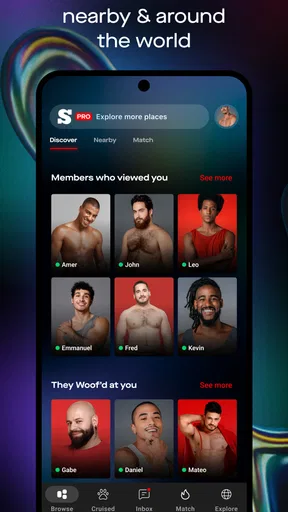
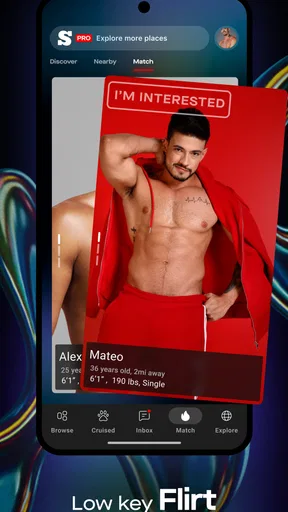
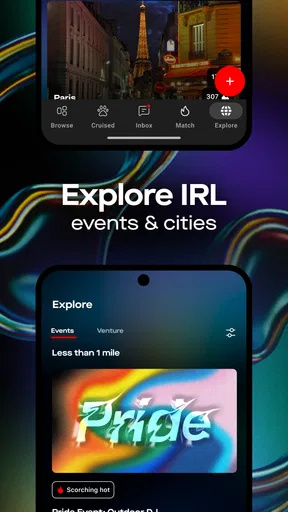
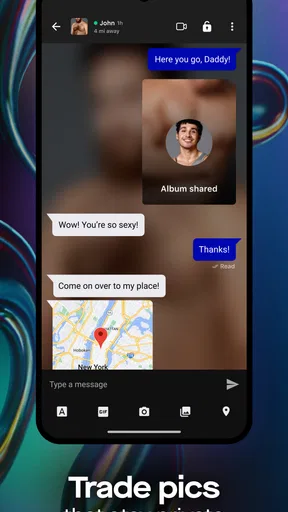
Our Review of SCRUFF
 Analysis by Appyee
I approached SCRUFF as a first-time user looking for a social app built specifically around gay chat and matching, rather than as a general-purpose dating service with a small LGBTQ+ audience added later. That distinction matters from the first screen: the app feels focused on helping men connect with other men, whether the goal is conversation, friendship, dating, or meeting people while traveling.
It is a free social app from Perry Street Software, with optional in-app purchases ranging from $0.99 to $169.99 per item. Its mature 17+ rating is a useful reminder that the conversations and profiles are intended for adults. The app has been around since Jan 22, 2011, and its current version is 8.13.2. That history gives it a more established feel than a newly launched matching app, although it also means the experience can feel broader and busier than someone expecting a very simple chat tool.
Getting from installation to a useful first connection
Before I judge whether the app is a good fit, I’d first focus on the choices that shape a new user’s experience: what to put in a profile, how much to reveal, and what kind of connection to seek. Starting with one clear intention makes it easier to browse thoughtfully and decide which conversations feel worth pursuing.
What the first visit feels like
The main thing I noticed is that SCRUFF is not only about swiping through a stack of carefully filtered potential dates. It presents itself more like a social network with matching at its center. That makes the app useful when you are open to several kinds of connection, but it can feel less direct if you only want a tightly managed dating flow.
For a new user, the best expectation is not “I will immediately find the perfect match.” A better expectation is “I will create a profile, see who is active around me or relevant to my interests, and decide which conversations deserve my attention.” That mindset makes the interface easier to understand and reduces the pressure to treat every profile as a serious romantic possibility.
The app’s scale is noticeable. It has passed 10 million installs and holds a 3.9 average from around 118 thousand ratings, so it is clearly not a niche experiment with an empty audience. At the same time, a large user base does not guarantee that every area will feel equally active. Your experience can still depend on location, timing, and how much information you put into your profile.
I also found that the mature audience changes how carefully I would use it. This is not an app I would hand to a teenager or approach casually without thinking about privacy. A strong first step is deciding how much personal information you are comfortable sharing before you start chatting. A recognizable profile can encourage replies, but oversharing your workplace, routine, or exact home location can create unnecessary risk.
Setting up a profile without overthinking it
The first setup is easier when you treat your profile as a conversation starter rather than a complete autobiography. Use a clear photo that looks like you now, choose wording that says what kind of interaction you are open to, and avoid trying to appeal to everyone. A short, specific description is more useful than a collection of vague claims about being fun, adventurous, or easygoing.
For example, mentioning that you enjoy quiet coffee, local food, or meeting people during a trip gives someone a natural opening line. It also helps separate a genuine conversation from a generic greeting. If you are mainly interested in dating, say so in a relaxed way. If friendship or local recommendations matter more, make that visible too. The app works better when your profile reduces guesswork.
One practical trade-off is between privacy and discoverability. A sparse profile reveals less, but it also gives visitors fewer reasons to contact you. A detailed profile can attract more relevant messages, yet every extra detail becomes part of your public social footprint. I would start with broad interests and general intentions, then add more only after seeing how comfortable the conversations feel.
Do not rush to buy anything during setup. The free version is enough to learn the basic rhythm of browsing, profile editing, and messaging. Optional purchases may appeal to users who want additional convenience, but a new user should first understand whether the available community suits their location and expectations. Paying before testing that fit is an avoidable mistake.
The first meaningful action
For me, the first successful action is not simply opening a profile. It is sending a message that has a reasonable chance of receiving a thoughtful reply. The easiest way to reach that point is to look for one concrete detail in a profile and respond to it. A message connected to a stated interest feels more personal than a one-word greeting, and it gives the other person a clear way to continue.
A realistic everyday scenario would be arriving in a new city for a weekend. Instead of waiting for a perfect match, I would set up a straightforward profile, browse nearby people, and start with a low-pressure question about a place to eat or something worth seeing. That approach uses SCRUFF as a social guide as much as a dating app. It also avoids making the first conversation feel like an interview.
If you are at home, the same workflow works with a smaller goal: begin one conversation with someone whose profile suggests a shared interest. Keep the opening specific, polite, and easy to answer. If the reply is short or absent, I would not treat that as a verdict on the app or on my profile. Messaging apps involve timing and personal preference, so a quiet response is normal.
A useful habit is to separate browsing from messaging. Spend a few minutes deciding what you actually want, then contact only people who seem aligned with that goal. This prevents the common trap of opening many profiles without forming any meaningful connection. It also makes the app feel less like an endless feed and more like a tool you are using deliberately.
Why the social side can be more useful than matching alone
SCRUFF’s strongest quality, in my experience, is its broader idea of connection. Someone may be looking for a date, but another person may want friends, conversation, travel company, or a local introduction. That flexibility gives the app more ways to be useful than a service where every interaction is judged only by romantic potential.
This is particularly valuable for people who have moved to a new place or are traveling alone. A dating-only app may encourage a quick decision based mostly on photos, while a social environment can make it easier to begin with a shared activity or local interest. The trade-off is that you may need to read profiles more carefully because the same space can contain different intentions.
I would also recommend being clear about boundaries early. If you are interested in conversation but not meeting immediately, say that without apologizing. If you are open to dating but not casual encounters, make the distinction clear. The app cannot remove all misunderstandings, so your profile and first messages do important work.
Common confusion during everyday use
The biggest possible confusion is assuming that every visible person is looking for the same thing. SCRUFF’s matching and chat focus can suggest a dating-first experience, but the social nature of the app means that users may have very different goals. Before investing time in a conversation, I would check the profile language and ask a simple clarifying question rather than guessing.
Another point of friction is deciding how much attention to give the app. A large community can create a steady stream of profiles, but more choice does not automatically produce better choices. If browsing starts to feel repetitive, narrow your own criteria instead of trying to inspect everyone. A clear preference for location, interests, or relationship intent can make the experience more manageable.
Some people may also wonder whether the free app is practical. It is a sensible starting point because you can evaluate the community and basic experience without committing money. The presence of purchases does mean that some conveniences may be positioned behind payment, and the highest listed item reaches $169.99. I would treat upgrades as optional tools, not as a requirement for being noticed or finding a conversation.
Privacy is another area where new users should slow down. Avoid moving immediately from an in-app chat to sharing personal contact details, workplace information, or a precise address. If you arrange a meeting, choose a public place and tell a trusted friend where you will be. These are not reasons to avoid the app; they are sensible habits for any adult social platform where people may meet offline.
It is also worth remembering that a profile photo is not proof of identity or intent. Keep early conversations inside the app until the person has earned a reasonable level of trust. Be cautious with requests for money, urgent favors, or unusually personal information. If a conversation becomes uncomfortable, ending it is a valid choice; you do not owe a stranger continued access to you.
How it compares with more conventional dating apps
Compared with a mainstream dating app, SCRUFF feels more targeted from the beginning. You are not relying on a broad audience to understand the context of gay chat and matching. That focus can make discovery feel more relevant, especially for users who want an LGBTQ+ centered environment rather than a general service.
The difference is not simply the audience. The app’s social character means that it can support conversations that are not immediately romantic. A mainstream service may offer a cleaner, more linear path from profile to mutual match, while SCRUFF can feel more open-ended. I prefer that openness when I am traveling or hoping to meet people without defining the outcome too quickly.
On the other hand, someone who wants a highly structured dating process may prefer a conventional alternative with stronger emphasis on deliberate matching, compatibility questions, or a narrower relationship purpose. SCRUFF is not automatically better; it is better for a user who values a focused community and several kinds of social contact.
It may also be a weaker choice for anyone who dislikes profile browsing, frequent social discovery, or the possibility of mixed intentions. If you want a quiet app where every visible person has clearly stated the same goal, the broader SCRUFF experience may require more filtering than you would enjoy.
Small habits that improve the experience
One non-obvious improvement is to revise your profile after using the app for a few days. Your first description may reflect what you think people want to hear rather than what actually leads to comfortable conversations. Notice which details attract respectful, relevant replies, then make those details easier to see. This turns the profile into something practical instead of permanent.
A second useful habit is to write messages that can be answered without effort. Questions that are too broad often produce silence, while a specific comment gives the other person a clear path forward. I would avoid sending the same opening to many people. Even when the message is polite, repetition can make the interaction feel transactional.
A third trade-off concerns speed. Meeting quickly can be exciting, especially while traveling, but rushing makes it harder to notice inconsistencies. Keeping a conversation going long enough to understand basic intentions is usually worth the extra time. If someone pressures you to ignore your boundaries, that is useful information about the person, not a challenge you need to overcome.
Finally, use the app with a defined purpose for each session. I might open it to find a local recommendation, respond to an existing conversation, or browse for a possible date. That simple intention prevents endless scrolling and makes it easier to judge whether the app is helping. Social apps can consume attention without producing connection when used automatically.
Who should try it and who should skip it
I would recommend SCRUFF to an adult gay man who wants a focused community and is comfortable with a mix of chat, matching, friendship, dating, and travel-oriented socializing. It is especially suitable for someone willing to write a profile with clear intentions and take responsibility for filtering conversations. The established audience is a real advantage for discovering people beyond a tiny local circle.
I would be more cautious about recommending it to someone seeking a strictly relationship-only environment, a completely private experience, or a very guided introduction process. It may also frustrate users who expect every profile to be active, nearby, and immediately responsive. The app gives you access to a community, but it cannot guarantee chemistry or availability.
People who are uncomfortable with mature social spaces should think carefully before installing it. The 17+ rating is not a minor label; it signals that the app belongs in an adult context. Younger users should not use it, and adults should still decide in advance what information they will share and what behavior they will not accept.
The next step after the first conversation
Once a conversation feels promising, I would move forward gradually. Suggest a simple topic or low-pressure plan rather than jumping straight to an intense commitment. If you are meeting in person, choose a public setting and keep your own transport and schedule under control. A good first connection should leave you feeling comfortable, not cornered.
If the first attempt goes nowhere, adjust one thing at a time. Improve the opening message, clarify your profile, or change when you browse. Do not immediately assume that paying will solve a mismatch in location or expectations. The most important upgrade is usually better communication and more selective attention.
Overall, SCRUFF works best when I use it as a focused social space rather than a machine for instant results. Its free entry point makes it easy to test, its mature audience requires sensible boundaries, and its combination of chat and matching gives it more flexibility than a narrowly romantic app. The 3.9 average from roughly 9.7 thousand reviews reflects a generally useful but not flawless experience, which matches my view: the app has real value, but the quality of the outcome depends heavily on how clearly and safely you use it.
My recommendation is to start slowly, complete a profile that says what you actually want, and aim for one genuine conversation instead of chasing every possible match. For the right user, that is where SCRUFF becomes worthwhile: not in the number of profiles you pass, but in finding a connection that fits the reason you opened the app in the first place.
Verdict
Strengths of SCRUFF
- Large LGBTQ+ community with users in many cities worldwide.
- Detailed profiles make it easier to find compatible connections.
- Powerful search filters help narrow down nearby matches.
- Supports private albums and controlled photo sharing.
- Includes events and travel features for meeting people safely.
Limitations of SCRUFF
- Some useful features require a paid membership.
- The interface can feel busy for first-time users.
- Location-based matching may raise privacy concerns.
- Profiles and activity levels vary significantly by region.
- Advertising and upgrade prompts can interrupt the experience.
Other Releases by Perry Street Software
View All
Jack’d - Gay Chat & Dating
Social4.0
Similar Picks in This Category
View All
Meta Platforms, Inc.4.6

Instagram4.0

Likee-Live, Chat & Party Games
Likeme Pte. Ltd.4.4

Facebook Lite
Meta Platforms, Inc.4.5

TikTok - Videos, Shop & LIVE
TikTok Pte. Ltd.4.0

Moj: Free Short Drama & Reels
ShareChat4.1
Frequently Asked Questions
What is SCRUFF, and who is it designed for?
SCRUFF is a social and dating app designed primarily for gay, bisexual, trans, and queer men. After exploring the app, its main purpose is clear: it combines profile discovery, private messaging, community interaction, and location-based browsing. Users can look for dating, friendship, networking, travel connections, or casual conversations. The audience is diverse, so profiles may have very different intentions and expectations.
Is SCRUFF free to download and use?
SCRUFF can generally be downloaded and used without paying, and the free version provides access to essential features such as creating a profile, browsing nearby members, viewing profiles, and sending messages with certain limitations. However, optional paid memberships and premium features may improve the experience by offering advanced search filters, more profile visibility, additional browsing controls, and fewer restrictions. Prices and available plans can vary by platform and region.
Does SCRUFF require location access, and can my location be hidden?
SCRUFF uses location information to help display nearby profiles and make its discovery features more relevant. During setup, the app may request permission to access your device location, but you can manage this permission through your Android or iOS settings. The app may show approximate distance rather than an exact address, although privacy-conscious users should still review visibility settings and avoid sharing identifying details in their profile.
Is SCRUFF safe and private to use?
SCRUFF includes common privacy and safety tools, such as profile blocking, reporting options, account controls, and settings that help manage what other members can see. Nevertheless, no dating or social app can eliminate every risk. Avoid sending money, be careful with personal information, and consider using the in-app messaging system until you trust someone. Meeting in a public place and informing a friend is also strongly recommended.
Can I use SCRUFF while traveling or to meet people in another city?
Yes, SCRUFF can be useful for travelers who want to discover LGBTQ+ people, events, and communities in other locations. Depending on the features available to your account, you may browse profiles in a destination before arriving, interact with local users, or explore travel-related community content. Results and communication options can depend on distance, membership level, and local activity, so availability may differ between cities.
